
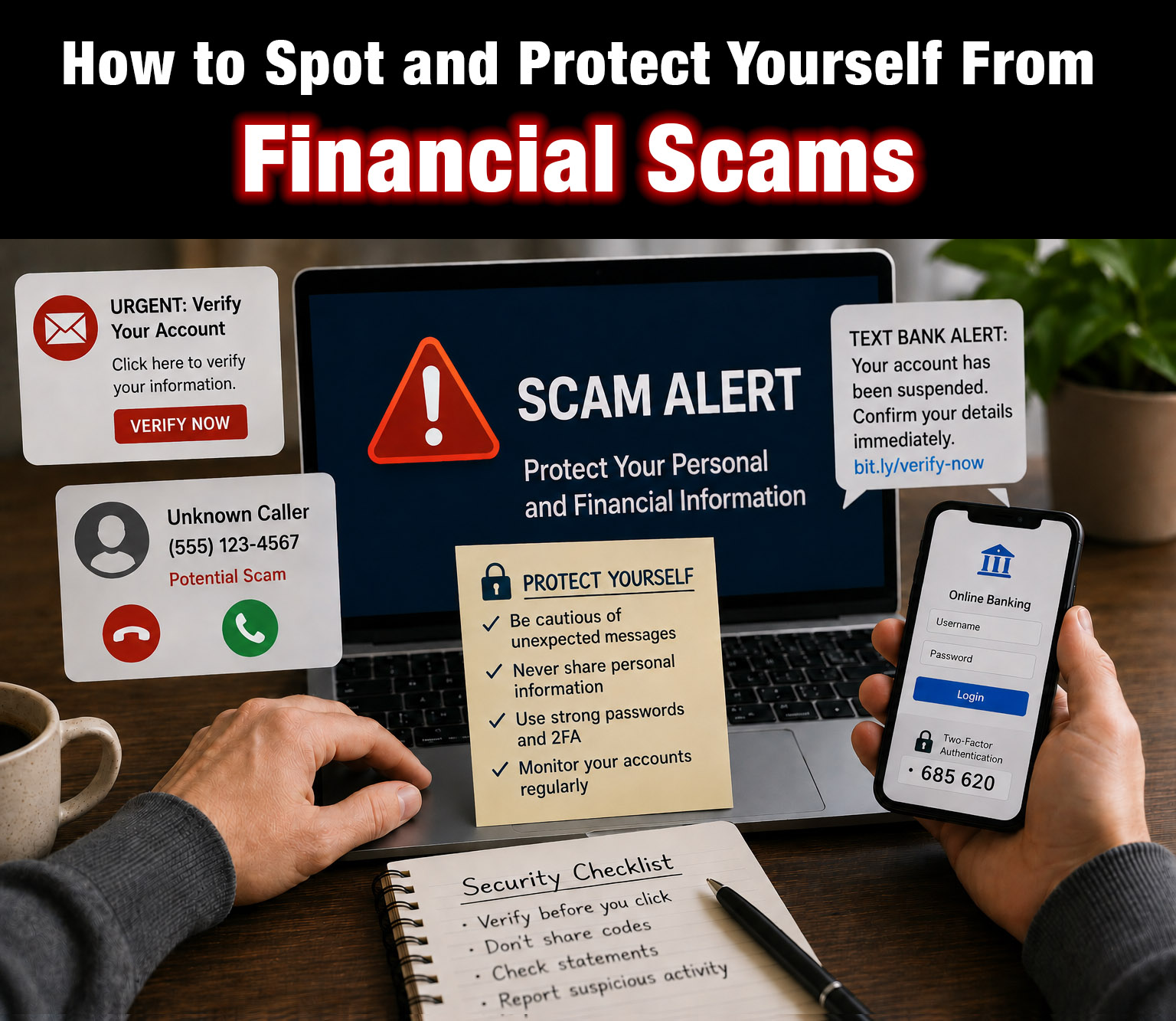
With security breaches and financial scams becoming more common, protecting your personal and financial information has never been more important. Scammers are getting more sophisticated, using emails, phone calls, text messages, fake websites and even social media to trick people into handing over sensitive information or money.
The good news is that learning how to recognize the warning signs can go a long way toward protecting yourself and your loved ones. Whether you manage your own finances or help an aging parent with theirs, understanding today’s most common scams is an essential part of financial wellness.
Why Financial Scams Are Increasing
Technology has made banking and bill-paying more convenient, but it has also created more opportunities for cybercriminals. Data breaches at large companies can expose usernames, passwords, account numbers and other personal details that scammers can use to target consumers.
At the same time, scammers have become more convincing, especially with the increased use of artificial intelligence. Many fraudulent emails and text messages look almost identical to legitimate communications from banks, delivery services, or government agencies. Criminals often create a sense of urgency or fear to pressure people into acting quickly without thinking.
Older adults are especially targeted because scammers often assume they are more trusting or may have accumulated savings. However, people of all ages are vulnerable to fraud.
Common Financial Scams to Watch For
Understanding the most common scams can help you identify suspicious activity before damage is done.
- Phishing Emails and Texts
Phishing scams are designed to trick you into revealing passwords, account numbers or other personal information. These messages may appear to come from your bank, credit card company or a trusted business.
Warning signs include:
- Urgent language demanding immediate action
- Suspicious links or attachments
- Requests for passwords or verification codes
- Misspellings or unusual email addresses
If you receive a suspicious message, do not click links or open attachments. Instead, contact the company directly using a verified phone number or website.
- Tech Support Scams
In these scams, someone claims there is a virus or security issue with your computer. They may ask for remote access to your device or demand payment to “fix” the problem.
Legitimate companies do not make unsolicited calls asking for access to your computer.
- Imposter Scams
Scammers may pretend to be government agencies, utility companies, financial institutions or even family members in distress. Their goal is often to create panic so you act before verifying the story.
If someone demands immediate payment through gift cards, wire transfers or cryptocurrency, it is almost certainly a scam.
- Romance Scams
Romance scams have become increasingly common, especially through dating apps, social media and online messaging platforms. In these scams, criminals build emotional relationships with victims over time to gain trust before asking for money or personal information.
Scammers often create fake profiles using stolen photos and may spend weeks or even months communicating before making financial requests. They commonly claim to be traveling overseas, working on an oil rig, serving in the military or dealing with an emergency that prevents them from meeting in person.
Warning signs include:
- Quickly expressing strong emotional feelings
- Avoiding video calls or in-person meetings
- Asking for money, gift cards or wire transfers, especially with cryptocurrency
- Requesting help with medical bills, travel expenses or emergencies
- Pressuring you to keep the relationship private
One of the biggest red flags is anyone you have never met in person asking for money. Even if the story sounds believable, proceed with caution and verify identities whenever possible.
If you suspect a romance scam, stop communication immediately and report the profile to the platform where you connected.
Identity Theft
Identity theft occurs when someone uses your personal information to open accounts, make purchases or commit fraud in your name.
Common signs include:
- Bills or statements for accounts you do not recognize
- Unexpected credit denials
- Missing mail
- Unfamiliar charges on bank or credit card statements
How to Protect Yourself
While scams continue to evolve, there are several practical steps you can take to improve your financial security.
- Use Strong, Unique Passwords
Avoid using the same password across multiple accounts. Create passwords that combine uppercase and lowercase letters, numbers and symbols.
A password manager can help securely store and generate strong passwords.
- Enable Two-Factor Authentication (2FA)
Two-factor authentication adds an extra layer of protection by requiring a second verification step, such as a code sent to your phone or email.
Even if a scammer gets your password, they may not be able to access your account without the second verification method.
- Monitor Financial Accounts Regularly
Review bank and credit card statements frequently for unfamiliar charges or suspicious activity. The sooner fraud is detected, the easier it is to limit the damage.
Many banks also allow you to set up transaction alerts that notify you of unusual activity.
- Be Careful Using Public Wi-Fi
Avoid accessing sensitive financial accounts on public Wi-Fi networks unless you are using a secure connection or VPN. Public networks can make it easier for hackers to intercept your information.
- Shred Sensitive Documents
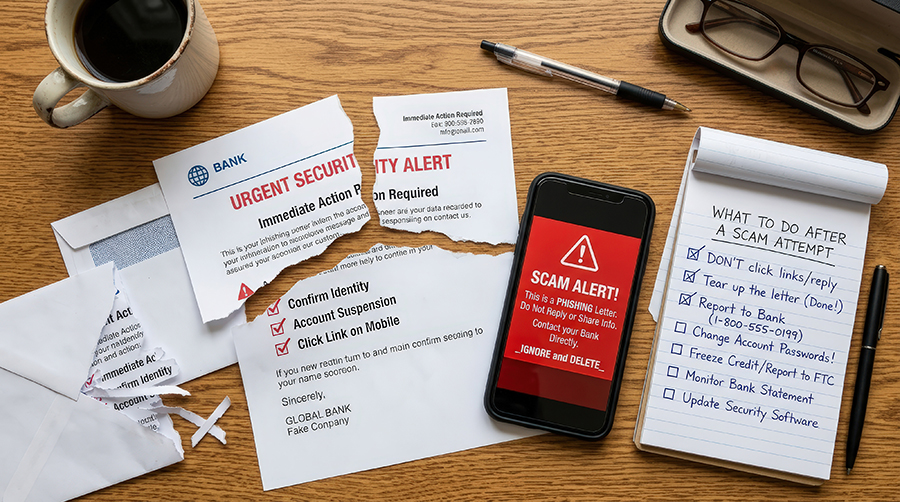
Paper fraud still exists. Shred documents containing account numbers, Social Security numbers or other private information before throwing them away.
Protecting Older Adults From Scams
Older adults are frequently targeted by scammers because they may be less familiar with evolving technology or may hesitate to report fraud out of embarrassment.
Families can help by:
- Having open conversations about scams
- Reviewing accounts and statements together
- Setting up fraud alerts
- Helping organize financial paperwork
- Encouraging loved ones to verify suspicious calls or emails before responding
A trusted daily money manager or financial professional can also provide an extra layer of oversight and support.
What to Do If You Think You’ve Been Scammed
If you suspect fraud, act quickly:
- Contact your bank or credit card company immediately
- Change compromised passwords
- Freeze or monitor your credit if identity theft is suspected
- Report scams to the local authorities as well as to Internet Crime Complaint Center (IC3.gov) and call your local FBI office
- Document suspicious activity and communications
Quick action can reduce financial losses and help prevent additional damage.
Final Thoughts
Financial scams are becoming more sophisticated and pervasive, especially with the rise of artificial intelligence. Awareness remains one of the best defenses. By staying cautious, monitoring your accounts, and learning to recognize red flags, you can better protect your finances and personal information.
Taking small preventive steps today can help you avoid a major financial mess tomorrow.


