
Every January, we set big goals: eat healthier, exercise more, save money. But there’s one resolution that’s often overlooked—and it can have an immediate impact on your financial health: never paying a late fee again.
Late fees may seem small, but over time they quietly drain your bank account, hurt your credit score, and add unnecessary stress to your life. The good news? Staying on top of your bills doesn’t require perfection or hours of budgeting. With a few smart systems in place, you can make late payments a thing of the past.
This year, let’s turn “I forgot” into “it’s already handled.”
Why Late Fees Are More Than Just Annoying
Late fees are expensive, but that’s only part of the problem. Missing due dates can also:
- Lower your credit score
- Trigger higher interest rates
- Create a cycle of anxiety over finances
- Damage relationships with service providers
When bills pile up mentally, they take up space you could be using for more important goals—like saving, investing, or simply enjoying your life.
Making “on-time payments” your New Year’s resolution is really a commitment to financial peace of mind.
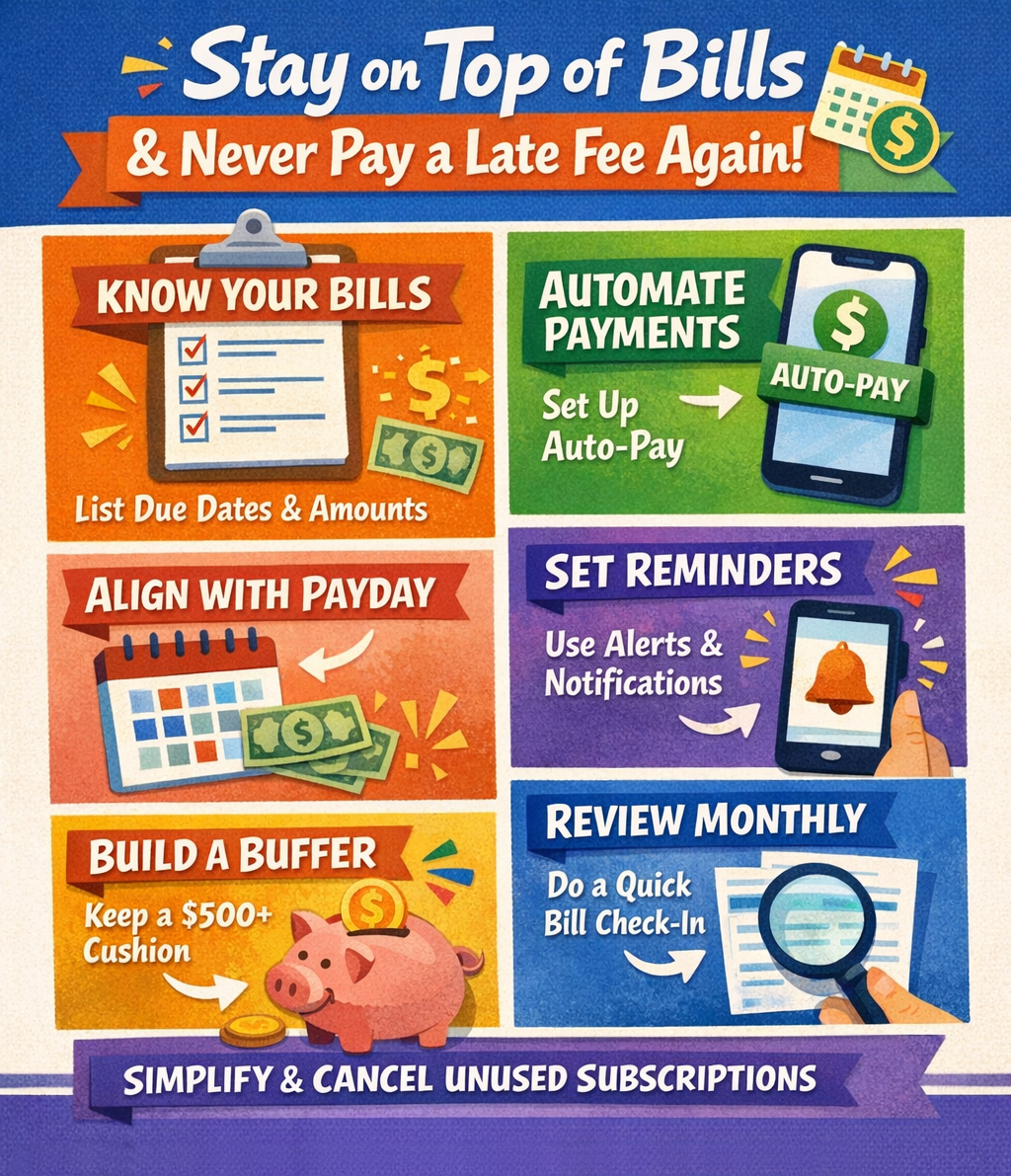
Step 1: Know Exactly What You Owe (and When)
You can’t manage what you don’t see. Start by creating a simple list of every recurring bill you pay, including:
- Rent or mortgage
- Utilities
- Credit cards
- Loans
- Subscriptions
- Insurance
- Phone and internet
Write down the amount, due date, and how it’s paid. This doesn’t have to be fancy—a spreadsheet, notebook, or notes app works just fine.
Once everything is in one place, you will likely feel immediate relief because clarity reduces stress.
Step 2: Automate What You Can
Automation is your best friend when it comes to never paying late fees again.
Set up:
- Auto-pay for fixed bills (rent, insurance, subscriptions)
- Minimum payments for credit cards to avoid late fees
Even if you prefer to pay balances manually, having automation as a backup ensures you’re protected if life gets busy.
And schedule payments a few days before the due date to allow for processing delays.
Step 3: Align Due Dates With Your Paycheck
If bills are scattered throughout the month, it’s easy to miss one. Many companies allow you to change your due date.
Try to:
- Group bills around one or two pay periods
- Pay bills shortly after you get paid
This creates a rhythm: money comes in, bills go out. Fewer surprises, fewer mistakes.
Step 4: Use Reminders (Without Relying on Memory)
Relying on memory is a setup for failure, especially when you’re juggling work, family, and life.
Try using:
- Calendar alerts
- Phone reminders
- Banking app notifications
Set reminders 3–5 days before each due date. Think of reminders as a safety net, not a crutch.
Step 5: Create a “Bills Buffer”
One of the biggest reasons people pay late is simply not having enough in their account when the bill hits.
Aim to keep a small buffer – $500 to $1,000 if possible – in your checking account. This cushion:
- Prevents overdrafts
- Gives more wiggle room for timing issues
- Reduces anxiety around payment dates
You don’t need to build it overnight. Add a little each month to create this buffer.
Step 6: Do a Monthly Money Check-In
Once a month, spend 15 minutes reviewing:
- What was paid
- What’s coming up
- Any changes in amounts
This isn’t about judgment – it’s about awareness. Think of it like a mini-financial tune-up that keeps everything running smoothly.
Step 7: Simplify and Eliminate Unnecessary Bills
The fewer bills you have, the easier they are to manage.
Review subscriptions and services and ask:
- Do I still use this?
- Does it bring real value?
Canceling even one or two recurring charges makes your budget lighter and more manageable.
Make 2026 the Year You Stop Paying “Forgetfulness Tax”
Late fees are essentially a tax on disorganization—not a moral failure, not a lack of intelligence. Systems beat willpower every time.
By setting up automation, reminders, and simple routines, you can remove bill stress from your life entirely.
This New Year, don’t just resolve to “be better with money.” Resolve to make money management easier. Your future self—and your bank account—will thank you.
Here’s to a year of on-time payments, zero late fees, and one less thing to worry about.


